
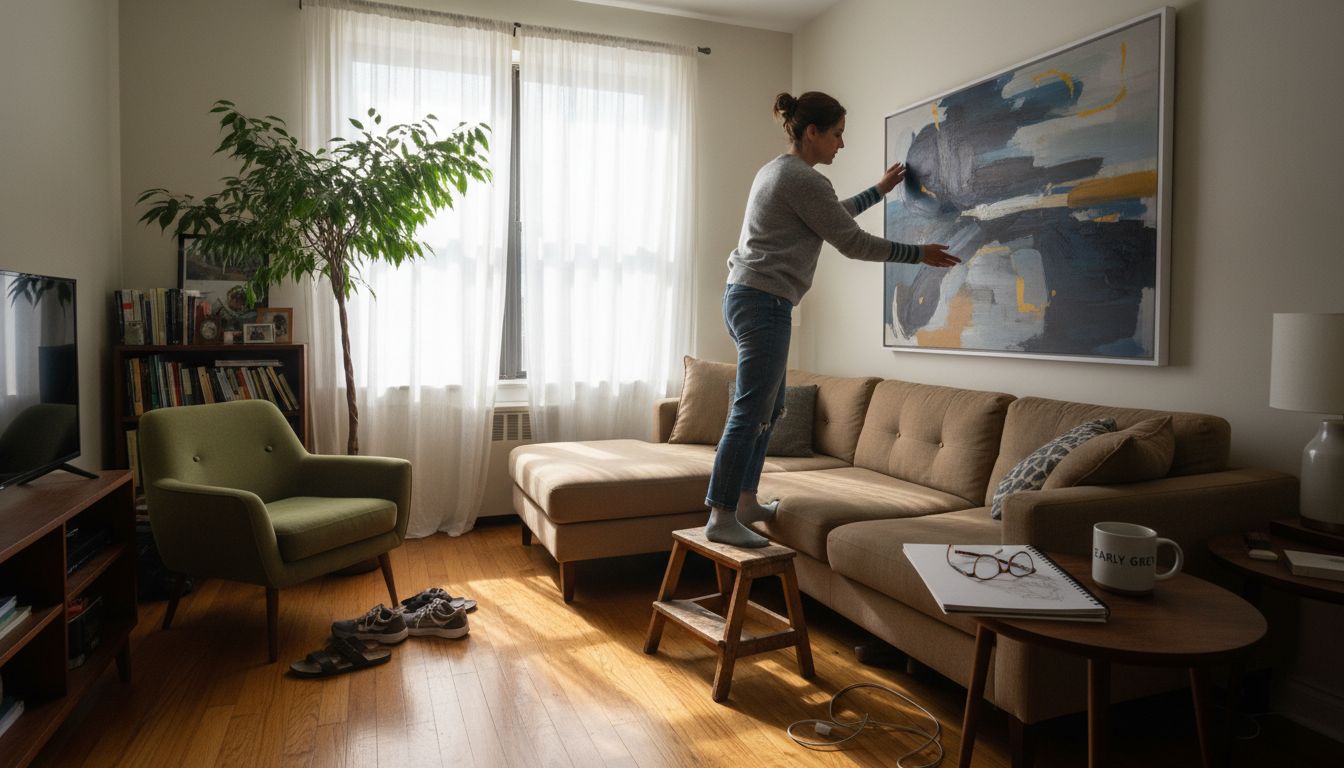

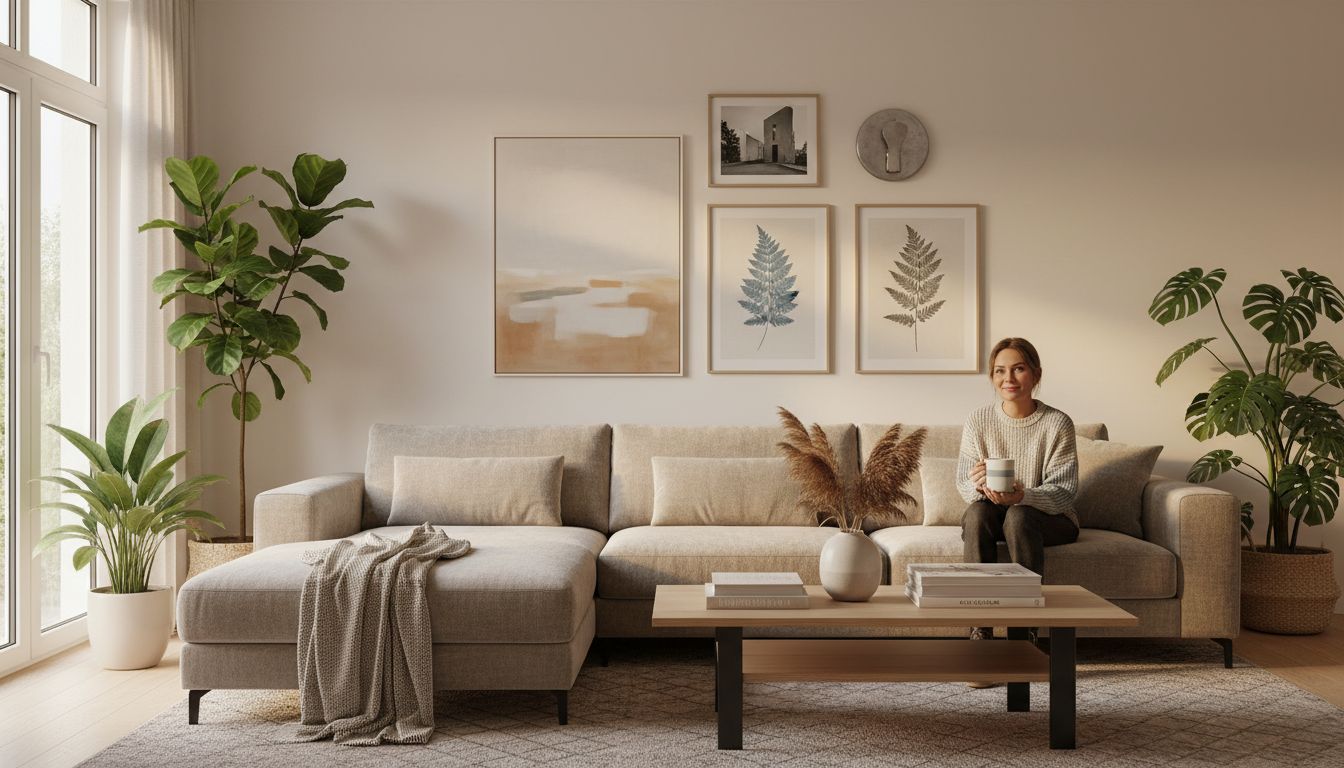
Almost one in three Germans spends a long time searching for the perfect piece of art for their living room. No wonder, since art instantly lends character to any room and can dramatically change its atmosphere. Those who better understand the impact of art on a room and their own personal style find it easier to make the right choice. In a few clear steps, you'll now learn how targeted analysis and modern technology can help you find art that truly suits you and your home.
Table of contents
- Step 1: Analyze the space and desired atmosphere
- Step 2: Define your art style and color preferences
- Step 3: Determine suitable sizes and formats
- Step 4: Select art for your living room individually
- Step 5: Use digital preview for the final decision
- Step 6: Check the overall effect in the room
Quick summary
| Important point | Explanation |
|---|---|
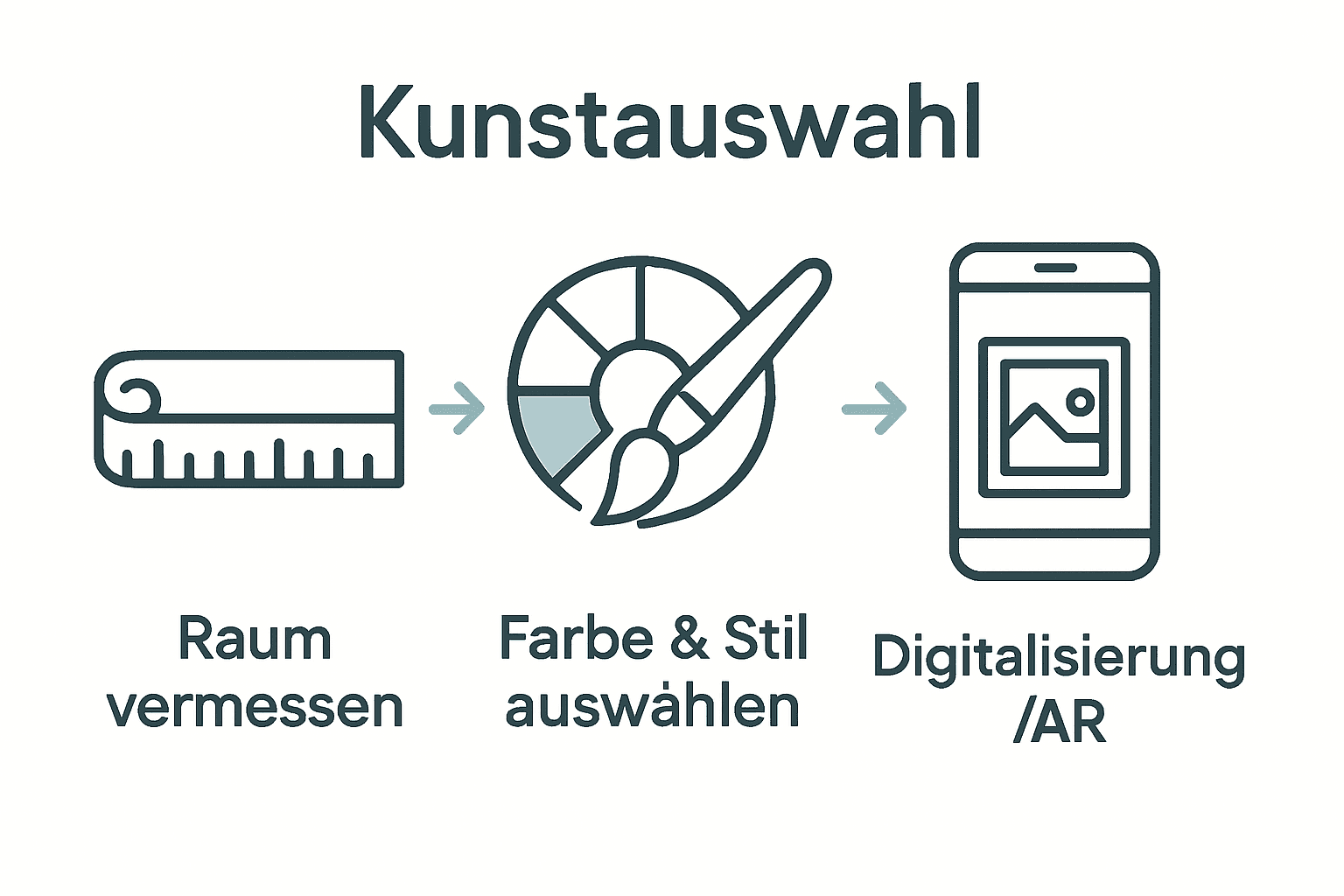
| 1. Analyze the space and atmosphere | Measure wall surfaces and consider colors and furniture styles to select suitable artwork. |
| 2. Define your personal art style | Explore your color and art preferences to find works that reflect your personality. |
| 3. Determine the correct sizes and formats | Art should occupy two-thirds to three-quarters of the wall width to create a harmonious effect. |
| 4. Make an individual art selection | Choose art that resonates emotionally and authentically reflects who you are. |
| 5. Use the digital preview | Use augmented reality to experience artwork virtually in your space and make an informed decision. |
Step 1: Analyze the space and desired atmosphere
Before choosing art for your living room, you need to carefully consider two important aspects: your space and the desired atmosphere. This initial analysis will determine which artwork perfectly suits your environment.
Begin with a detailed inventory of your living room. Measure the available wall space and note existing color schemes, furniture styles, and lighting. Make a note of wall colors, flooring, and furniture tones. Ask yourself the crucial question: Should the art be harmoniously integrated into the room or create a deliberate contrast? A contemporary abstract canvas can generate exciting visual dynamism in a classically furnished room.
The key lies in the atmosphere. Do you want to convey peace and relaxation? Then muted colors and soft shapes are ideal. Are you looking for energy and vibrancy? Then bold colors and dynamic compositions are the way to go. Create a mood plan and let your intuition guide you. Every room tells a story, and the right art can bring that story to life.
Step 2: Define your art style and color preferences
Now it's about discovering your own personal art style and understanding which colors and aesthetics touch your soul. This self-exploration is the key to selecting artworks that not only decorate your walls but also reflect your personality.
According to interior design concepts, the combination of art and furnishings plays a crucial role in creating a harmonious atmosphere. The color wheel can help utilize complementary contrasts and generate a dynamic sense of space. Experiment with different art styles. Are you more fascinated by abstract compositions or do you prefer realistic depictions? Modern art or classical paintings? Take the time to visit museums, browse online galleries, and study art books.
Pay particular attention to color moods. Warm earth tones convey a sense of security, cool blues and greens create tranquility, while vibrant reds radiate energy and passion. Let your emotional responses guide you. A work of art should not only be aesthetically pleasing but also connect with your feelings and your life story. In the next steps, we will further refine this personal artistic language.
Step 3: Determine suitable sizes and formats
Choosing the right size artwork can make the difference between a successful and a mediocre wall display. In this section, you'll learn how to find the perfect size and format for your living room.
The first step is to carefully measure your wall space. As a rule of thumb, the artwork should occupy approximately two-thirds to three-quarters of the wall's width. For a 300-centimeter-wide wall, this would ideally mean artwork between 200 and 225 centimeters wide. Also consider the hanging height. Generally, the center of the picture should be positioned at eye level or slightly below, about 150 to 160 centimeters from the floor.
The room's geometry plays a crucial role in choosing the right format. Square formats create a balanced and harmonious look. Rectangular formats can visually lengthen or shorten a room. A wide, landscape-format image can visually enlarge a room, while a portrait-format image can make a room appear taller. Experiment with different combinations and let your creativity flow.
The next step will help you implement these ideas even more precisely.
Step 4: Choose art for your living room individually
Now it's about finding art that not only adorns your walls but also reflects your personality and lifestyle. A personalized art selection is like a love letter to your living space.
Begin by honestly taking stock of your feelings and preferences. The Art for the Home guide recommends paying attention not only to the visual impression, but also to the emotions a work of art evokes in you. Ask yourself: Does this picture touch me? Does it tell a story that resonates with me? Do I feel a connection? Trust your intuition more than theoretical considerations.
Another key to selecting art for yourself lies in authenticity. Avoid buying art simply because it's trendy or someone else has recommended it. True art arises from a personal connection. Experiment with different styles and techniques. Visit galleries, art fairs, or browse online platforms. Let yourself be inspired by works that spark your curiosity and touch your soul. In the following steps, we will refine this selection even further.
Step 5: Use digital preview for the final decision
The digital preview is your personal art assistant, helping you make the perfect choice for your living room. Modern technology allows you to virtually place artworks in your space and experience their impact beforehand.
Many online platforms and apps now offer innovative augmented reality features. With fine art print canvases, you can project artworks directly into your room. Simply photograph your wall and digitally place different artworks. Pay attention to factors such as color harmony, proportions, and emotional impact. Experiment with different positions and orientations.
Use this preview as a decision-making aid, but not as an absolute standard. The digital simulation can only partially reproduce nuances such as lighting or material textures. Ultimately, trust your personal perception. If possible, it is also recommended to arrange a trial hanging or loan to experience the artwork in person.
 In the next step, we will refine the details of the art presentation.
Step 6: Check the overall effect in the room
The final placement of art is more than just a picture on the wall. It's about creating a harmonious overall composition that reflects your personality and enhances your living space. Here you'll learn how to holistically assess the impact of your art choices.
Why Buy Contemporary Art? This article emphasizes the importance of thoughtful interior design. Take a few steps back and consider your artwork within the context of the entire room. Pay attention to the interplay of colors, shapes, and textures. The artwork shouldn't appear isolated but rather connect with the furniture, flooring, and other decorative elements. Ask yourself: Does the painting tell a story? Does it create an atmosphere? Does it draw the eye or harmonize subtly?
A professional trick is to use a temporary arrangement. Initially, only temporarily attach the artwork to the wall and observe its effect over several days. View it at different times of day and under varying lighting conditions. Trust your intuition. If a piece of art doesn't convey the desired energy or doesn't feel right, you are free to rearrange it. Finding the perfect art placement is a journey of discovery.
Find your perfect art for your living room
Choosing art for your living room is often a challenge, as it requires a thorough understanding of the space and the desired atmosphere , and finding art that directly reflects your personality. Our guide shows you how to perfectly coordinate colors, formats, and emotions to transform your living space into a unique haven of tranquility or vibrancy. But how do you put these valuable insights into practice?

Discover expressive works by artist Ea Bodin at Kleine Originale Malerei, pieces that perfectly blend emotional depth with modern aesthetics. Take advantage of a personalized consultation at https://eabodin.com to transform your living room with vibrant art.
 Take the plunge and feel the difference when your walls become your personal story.
Frequently Asked Questions
How do I analyze my space and the desired atmosphere for art?
To analyze your space and the desired atmosphere for art, measure the available wall space and note the existing colors and furniture styles. Record everything in a mood plan to help you make a harmonious or contrasting selection.
What art styles and color preferences should I consider for my living room?
Discover your personal art style by experimenting with different styles and techniques. Pay attention to which colors evoke emotions in you and think about combinations that reflect your personality.
How do I determine the appropriate size and format for artworks in my living room?
To determine the correct size and format, you should consider your wall space. A work of art should occupy approximately two-thirds to three-quarters of the wall's width, and the focal point should be hung at eye level.
What should I consider when individually selecting artwork for my living room?
Make sure the artworks have a personal connection to you and aren't chosen simply because of a trend. Experiment with different styles and let your intuition guide you to select the best pieces.
How can I use digital preview tools to choose the right art for my living room?
Use digital preview tools to virtually place artwork on your wall. Photograph your wall and test different artworks to check their color harmony and proportions.
How do I assess the overall effect of the artworks in the room?
Take a few steps back and consider the artwork within the context of the entire room. Pay attention to its relationship to furniture and other decorative elements to ensure a harmonious overall effect.


Leave a comment
This site is protected by hCaptcha and the hCaptcha Privacy Policy and Terms of Service apply.